
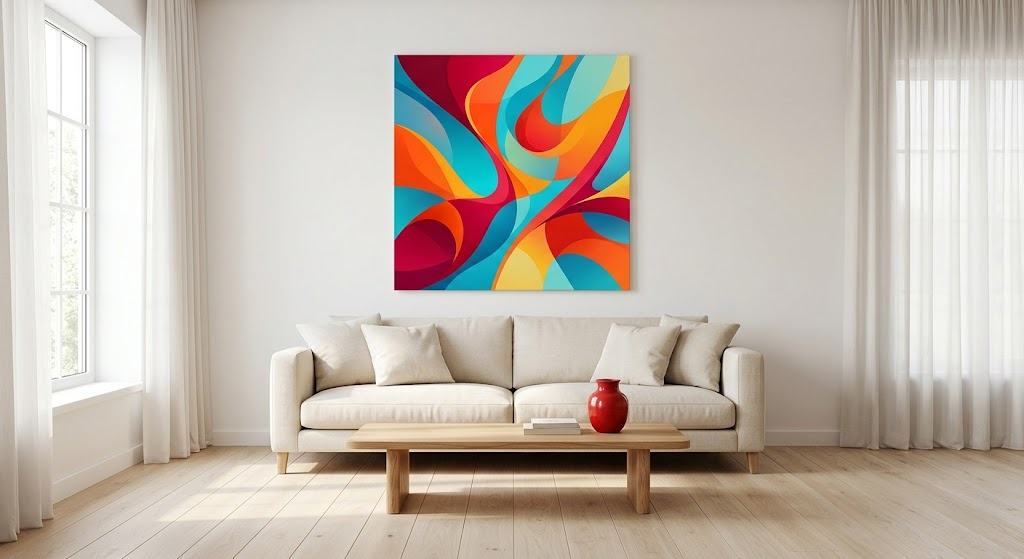
Elevate your minimalist space with the vibrant versatility of digital art prints.
The assumption that digital art is strictly futuristic or “cold” is a misconception that many digital art creators are actively dispelling. In reality, modern digital creations offer a powerful and fluid way to infuse warmth, personality, and contemporary style into the clean lines and neutral palettes characteristic of minimalist and Scandinavian interiors. Whether you are a creator showcasing your work or a collector curating your home, the challenge isn’t the art itself, but how it’s integrated.
This guide is designed for the modern creator and collector, focusing purely on visual and inspirational lifestyle application. We will explore how a digital canvas—which offers unparalleled flexibility in scale and color—can transform from a mere pixel print into a defining, harmonious element of a calm, curated home. Ready to reimagine your living room? Here are 5 ways to merge the digital and the scandi.
1. The “Statement Piece”: Choosing One Large Format as the Focal Point
In a truly minimalist or Scandinavian room, the mantra is “quality over quantity.” When you remove clutter, every item must carry significant weight. A single, large-format digital print acts as the “Statement Piece”—the singular element that captures attention and anchors the room.
A digital canvas print allows you to print at a monumental scale, commanding the space without feeling heavy. When selecting an artwork, look for something that resonates with the room’s function. A fluid, monochromatic digital abstract works beautifully in a calm bedroom, while a bolder, geometric composition might energized a living area. The large format makes the space feel larger by giving the eye a definitive place to land.
2. The Gallery Wall: Mixing Textures for Cohesion
A gallery wall allows for a dynamic interplay between different mediums. Digital art excels here. Don’t just hang four digital prints next to each other; instead, interweave them. Mix digital illustrations—perhaps an abstract botanical piece or a minimalist landscape—with candid photographs, graphic typographic quotes, or a small, textured fabric sample.
This approach prevents the wall from feeling too uniform. For digital art creators, this is an excellent strategy to show how your work can live in harmony with other forms. The flexibility to print different aspects of your portfolio in varying sizes means you can create a perfectly balanced and personalized grid or cluster.
3. Playing with Formats: Digital Art as Architectural Accessory
The inherent digital nature of the artwork means its dimensions are fluid. If you have a long sofa, a vertical portrait (even a beautiful one) will feel disconnected. You can adapt the digital source file to a wide landscape format, anchoring the entire furniture arrangement.
Think about where the art will be placed. A square format is perfect above a balanced console table. A long landscape or a diptych (two prints side-by-side) balances a mantelpiece or a sofa. A portrait format works beautifully on a narrow accent wall. The ability to tailor the format ensures the artwork becomes an integrated accessory, not an afterthought.
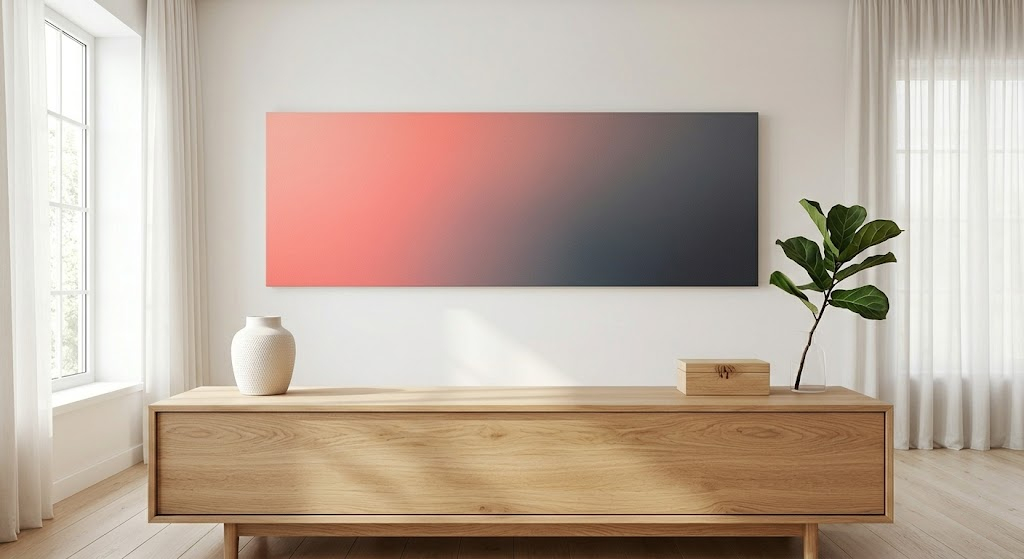
4. Chromatic Harmony: Using Art to Weave Color Back In
Perhaps the most potent feature of digital art in a minimalist setting is its color control. A Scandinavian interior often relies on whites, light grays, warm beiges, and pale woods. A digital canvas can introduce a vibrant pop of color without overwhelming the calm atmosphere.
Use the artwork to pick up existing (or introduce new) accent colors. If your digital art features warm amber and soft sage green, you can echo those tones in throw pillows, a small lamp base, or a few ceramic pieces. Digital art creators can even customize palettes for specific interior design projects, ensuring the art and the architecture speak the same color language.
5. Keep it Minimal: Framing Matters
The framing technique is the final, crucial step in integration. For a Scandinavian look, heavy, ornate frames are a definite ‘no.’ Stick with the simplicity. A simple, floating canvas wrap is ideal for an unobstructed, contemporary feel. The clean edge lets the art be the main focus.
If you prefer a framed look, choose a very thin, minimalist frame. Materiality is key: natural light oak (matching Scandinavian floors), matte white (to blend into the wall), or a thin matte black (for strong definition) are all excellent choices. The frame should define the art, not compete with it.




